
France Leaks 2025 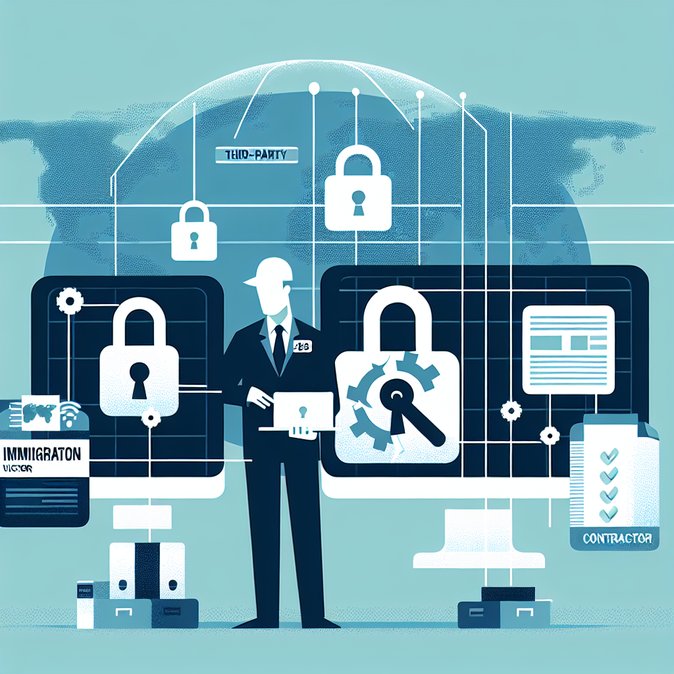 


France’s Quiet Data Leaks: when “semi-public” institutions spill real people’s data
An explainer for readers who don’t live inside the French administrative maze
France likes paperwork. France also likes centralised digital platforms. Put the two together, add underfunded IT and a long supply chain of subcontractors, and you get 2025: a year where data leaks stopped being shocking and started being routine.
For an international audience, the tricky part isn’t the hacks themselves. It’s understanding who these organisations are, why they have so much data, and why a breach there actually matters. Let’s demystify the cast.
The French state is bigger than “the government”
In France, “the government” isn’t just ministries. It’s a galaxy of semi-public bodies: agencies, funds, federations, and platforms that sit somewhere between the state and civil society. They often have legal authority, public funding, and mandatory user bases — but wildly uneven cybersecurity maturity.
When one of them leaks data, it’s not a startup mishap. It’s a slice of the population.
Fédération Française de Tir (FFTir)
What it is: The FFTir is the national governing body for shooting sports in France. It operates under delegation from the Ministry of Sports and is part of the Olympic ecosystem.
Why it holds sensitive data: If you want to practice shooting sports legally in France, you need a licence. That licence is issued through FFTir, which means it holds personal identity data for hundreds of thousands of members.
What leaked in 2025: Personal information such as names, dates of birth, addresses, emails, phone numbers, and licence numbers. Not weapon registries, not banking data — but more than enough for targeted phishing, intimidation, or doxxing.
Why non-French readers should care: This is a classic example of a “non-government government”. It’s not a ministry, yet participation is effectively mandatory for a regulated activity. These hybrid bodies often fall through the cracks of serious security oversight.
URSSAF and Pajemploi
What it is: URSSAF collects social security contributions in France. If money flows between employers, employees, and the welfare system, URSSAF is involved. Pajemploi is one of its services, dedicated to childcare and domestic employment.
Why it holds sensitive data: Names, addresses, social security numbers, employment relationships, income declarations — this is core identity infrastructure.
What leaked: In 2025, Pajemploi data affecting over a million individuals was exposed. Separately, partner APIs tied to URSSAF services were accessed without authorisation, exposing employment-related datasets.
Why this matters: In many countries, leaking a credit card is bad. In France, leaking social identifiers is worse. These datasets enable long-term fraud, identity theft, and social engineering at scale.
France Travail (formerly Pôle Emploi)
What it is: France’s national employment agency. If you’re unemployed, changing jobs, or receiving benefits, you pass through France Travail.
Why it holds sensitive data: Employment history, identity documents, addresses, benefit eligibility, and sometimes bank details.
What happened: Multiple incidents across recent years culminated in further breaches and regulatory sanctions in 2025. Tens of millions of profiles have been exposed historically, making this one of the largest public-sector data failures in Europe.
Why it matters: This is population-scale exposure. Even if you personally weren’t affected, your data almost certainly passed through the system at some point.
Office Français de l’Immigration et de l’Intégration (OFII)
What it is: The agency managing integration programs for immigrants and foreign residents in France.
Why it holds sensitive data: Foreign nationals’ identities, addresses, phone numbers, training records, and administrative status.
What went wrong: A subcontractor breach exposed data for around two million people. The main systems weren’t “hacked”, but the outcome for affected individuals is the same.
Why this one is especially dangerous: This data concerns people who are often already vulnerable. It’s prime material for scams, coercion, or impersonation — and it leaked because of third-party dependency, not a sophisticated nation-state attack.
The pattern that keeps repeating
What ties these incidents together isn’t elite hacking. It’s mundane failure:
Credentials reused by partners. APIs exposed without proper controls. Document upload platforms treated as “low risk”. Oversight diluted across too many actors.
France isn’t uniquely incompetent here — it’s just unusually centralised, which magnifies the blast radius.
The uncomfortable takeaway
For years, citizens were told to trust official platforms over “unreliable private services”. In practice, institutional scale has become a liability. When a semi-public body leaks data, there’s no opting out, no deleting your account, no switching provider.
For an international audience, the lesson is simple and transferable: When a country builds digital public services, governance matters more than technology. Without brutal clarity on responsibility, security becomes everyone’s job — which means it’s no one’s job.
And that’s how data quietly escapes, one “non-government” organisation at a time.
—